

Trauma-informed coaching support for sensitive, neuro-spicy, and former-gifted-kids building ecosystems that support their creativity and brilliance.
Burnout coach
for unconventional minds
burnout is a turning point. An invitation to come home to yourself, and restore equilibrium in your ecosystem.

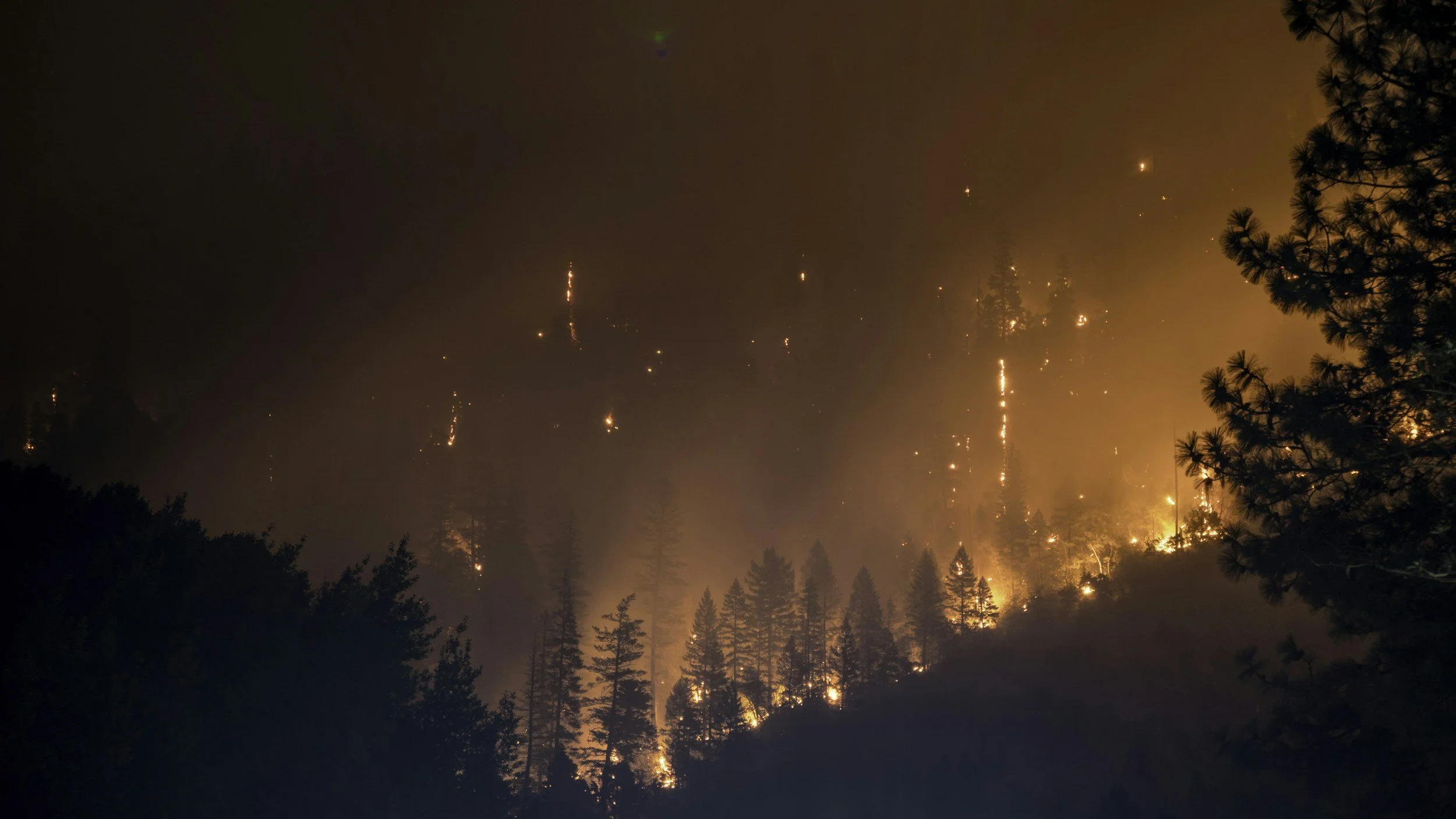
Though, it might not seem like that in the moment…
That moment where we realize you can’t go on like this anymore. When we finally reach for the word burnout, we’ve usually been on fire… for a while. Because all the things that burned us out are the things we’ve been doing to hold it together and make it through for so long. That’s what causes the energetic debt. Like a pot that’s been left to boil on a hot stove for so long that there’s nothing left in there anymore.
So we rest. We refill the pot. But what comes after rest? What good is rest if you’re still on fire?
When folks come to work with me they aren’t just burned out. They’re ready to light everything on fire if it isn’t already burning. It’s a specific feeling of being fucking done. But not knowing what’s next.
So, let me spoil it for you…
HERE’S WHAT’S NEXT:
The process of burnout recovery isn’t linear. But there's an overall trajectory, and it looks roughly like this:

-
You're starting to realize how hard you've been straining. Your framework for your own experience is shifting. You're questioning things that used to feel solid. Maybe you're relieved, or angry, or both at once

-
You're beginning to suspect that the struggle wasn't because you were wrong or broken, but because you were taught you were — usually by well-meaning people who told you to override your instincts and comply. You're ready to start listening to yourself instead. Trust comes back slowly, in small increments as you test and grow your strengths.

-
You're learning how you actually do things. How you learn, rest, focus, love, grow. This stage takes real openness and curiosity. You'll run into beliefs that feel suddenly out of date. Radical acceptance is trickier than it sounds… and also more spacious than you might expect.

-
You know more about what works for you. Systems are up and running. You're learning how much slack to cut yourself and how hard to push. You're translating what you've learned into new territory. It's not perfect (no garden is) but this one is yours.

I call this process “inner permaculture”
The art of returning to yourself. Adapting to your rhythms and tending yourself like an ecosystem.
It’s burnout recovery done sustainably using systems thinking. It doesn’t stop after rest. And it’s what we do here.
Why?
Well because…
Your burnout didn’t happen in a vacuum. You’re a living system in a living system.
No two burnouts are the same. Each person’s problems, solutions and journeys will be different.
Your burnout might not have one obvious source, but could be a result of many slow energy leaks.
Sensitivity/neurodivergence means that tips and tricks that work for the average person may do more harm than good. Especially if they fail to recognize the cost of masking.
The systems and boundaries you implement need to come from you or they won’t work for you.


“Working with Annalee enabled me to tap into the source of my own creative genius and function at a highly energized level.”
-Denis .T
Who the heck am I, anyway?
I’m Annalee, and I know this terrain well.
I’m an ICF certified Trauma-informed coach, but this work springs from lived experience, not certifications.
The same nervous system that makes me an artist, exceptional pattern recognizer, and the friend you call in a crisis also makes me a bad fit for a lot of the systems in this world in a way that has a lot of labels and some diagnoses now. But when I was growing up it was called being weird, too much, too sensitive, gifted but never living up to my “potential”. Maybe you can relate.
I had my first experience of burning it all down when I was 15. After a decade of stifled creativity and stuffing myself into boxes that didn’t fit, I was so burned out and fed up with the school system that it radicalized me into leaving and becoming a self-directed learner. The unschooling framework gave me a new way of seeing the world that’s still at foundation of what I do. Agency, responsibility, community and trust. Trust in our natural motivation and ability to lead ourselves to our best possible life.
I’ve burned out and rebuilt since then, of course. There have been other rock bottoms and radicalizing moments. But I always come back to this understanding of myself and my environment as one ecosystem. Even the fire is part of it: clearing away what no longer serves to make room for new growth. The worldview I developed and the systems I’ve grown from it act like old growth trees: seeding new versions of my life that adapt to the changes around me.
And, my coaching and visual practices mean I can map that process and share it. That way you don’t have to do it alone.


The irony is that burnout demands drastic changes just when we’re the least resourced to make them. We need to be strategic.
For example, even if your 9-5 is stressing you out, starting a business so you can leave that 9-5 might make things worse and not better if you’re in the depths of energy debt. If you’ve been resting for months and not seeing improvement, it might be time change how you’re resting, or it you might need to exercise your creativity.
So, I’ve created a coaching process and package for different stages of the journey

For brand new business builders
For when you feel deeply depleted
For seasoned leaders who need to zoom out
For creative-self recovery

FAQ:
-
This is worth taking seriously. If you're in acute burnout and genuinely can't hold one more commitment, this might not be the right moment. I'd rather you know that than sign up and add "show up for coaching" to your list of things to feel bad about not doing.
That said, most people who come to me are not in acute crisis. They’re either figuring out how to rebuild after burnout recovery, or they're in the chronic, grinding version of burnout: functional but not thriving, managing but not moving. For that, coaching isn't one more thing on the list. It's the thing that starts to reorganize the list.
We go at your pace. If you need to slow down, we slow down. If you need to take a break, we make a plan for that. The goal is never to add pressure.
-
Most support systems were designed for a different kind of person than you are. Insight-based approaches only go so far without somewhere to actually practice doing things differently. If you've done a lot of inner work already, you're not starting from zero. You're ready for the next part.
However, coaching isn’t a magic elixir. Results aren’t guaranteed, and it works best if you have a bit of bandwidth or some resources to dedicate to it.If you feel like your head is underwater therapy or something similar would be a better fit.
-
The simple answer is a question: how well resourced do you feel?
I think of coaching as something we do when we have resources and want to improve our lives. Therapy comes in when we are underresourced and need help to get our head above water. If therapy is a life preserver, coaching is a sail for your sail boat.
-
I’m trained specifically to work with neurodivergent folks. I actually find that coaching everyone as if they are neurodivergent is more effective.
By that I mean:I’m curious about how each person, specifically, functions.
I believe that adaptations are for all humans and not just a few people on the fringes.
I take a strengths based approach no matter who I’m working with.
I use the social model of disability in my work. There are some specific challenges that neurodivergent folks (diagnosed or not) often face. For example overusing areas of gifted-ness to compensate for challenge areas, and dealing with specific trauma around rejection, self trust, and being controlled.
My work is based in the unschooling approach to self-directed learning. This is a way of learning that works especially well for many neurodivergent folks.
-
Coaching usually centres around one topic per session. But sometimes arriving at a clear topic or question is half the work. Sometimes the topic shifts as we explore it.
If you have a specific topic, great! If you have only a vague idea, no problem. I’m happy to help you get to the clarity you need.
In our initial session we’ll talk about a zoomed out vision for what you’d like to explore or accomplish in our time together. This gives us a good place to start each time we meet.
-
It happens! Usually, one or both of us will notice and say something. If you feel this coaching relationship isn’t what you need, then I applaud your clarity. I’m happy to recommend someone else and/ or wish you well on your next steps. Sessions are purchased individually so there are no packages to refund.
-
It means I’m a big ol’ nerd about the nervous system.
I’m well versed in how the difficult things we’ve experienced in life show up in our bodies. I’m practiced at sensing when you get activated, and I know how to help you ground in your strength.It does not mean we will directly work on trauma the way you might with a therapist.
It’s important to work with a trauma-informed coach because coaching will always push us out of our comfort zone. We don’t have blocks for no reason. They’re usually survival strategies. You deserve support from someone who understands this, and knows how to open more choices for you in a way that doesn’t flood your nervous system.
-
That discomfort is worth examining, because it's often one of the first things we work on. The belief that you have to earn care — that investing in yourself requires justification through productivity or ROI — is one of the core patterns that leads to burnout in the first place.
You don't have to resolve that discomfort before you book. But I'd invite you to notice it.
If cost is a genuine barrier, two sliding scale spots are available by application, with a lower end of $75 CAD. Mentor coaching is also available on request. Reach out and we'll figure out what's possible.
-
Honestly no. Not on its own. I don't believe in self-help as a substitute for systemic change, and I'm not going to pretend that doing inner work exempts anyone from the impacts of an extractive system. Nobody gets to opt out completely, and individual resilience is not a solution to collective harm.
But we do need to navigate the system we're actually in, as well as we can, while it changes. Which it does, slowly, when enough people insist on being themselves and advocating. The more people who refuse to perpetuate these systems in small ways in their own lives, who bring their actual selves into their work and relationships and communities — the more our collective landscape shifts.
Coaching is not the whole answer. It's one place where you get to practice being fully yourself. That's not nothing. In fact, for most people, it turns out to be quite a lot.
You’ve still got questions? Not sure if this is the right fit for you? Maybe you need to feel it out.
No problem! You can book a free 30 minute…
-
![A woman with dark hair, wearing a sleeveless dark top, speaking into a microphone and gesturing with her hand, against a purple background.]()
Gigi .G
Annalee possesses a talent for understanding complex personal dynamics. Her approach is very intuitive, and her visual analogies always give me great positive shifts in my mindset for the goal at hand. I always come out of the sessions with more clarity and feeling recharged. Coaching with Annalee will not only inspire you, but also equip you with the tools to sustain and continue your growth long after your sessions end.
-
![A woman with curly hair, partly covering her face, wearing a white lace top.]()
Vaelei .W.B
I recommend working with Annalee if you’d like to get to know yourself and your purpose/dharma/reason for being here a bit more. I attribute much of the work from our sessions to bringing me to my path today.
-
![Close-up of a smiling woman with long gray hair, wearing glasses and a white embroidered blouse, outdoors with trees in the background.]()
Marie .N
I highly recommend working with Annalee!
Her open, flexible and non-judgmental approach to coaching always made it a safe space for me to explore and take risks. Her sense of observation, curiosity and deep inquiry helped me gain new perspectives and move forward with my projects.
I’ve always felt inspired and empowered after our coaching sessions
-
![Black and white portrait of a woman with long hair, wearing a turtleneck and earrings.]()
Marisa .V
Coaching partnerships built on solid foundations of trust, like the ones Annalee is known for building, are the bedrock upon which transformation begins and transcendence transpires.
-
![Man in blue suit and tie taking a selfie outdoors with greenery in the background.]()
Denis .T
My favourite thing about working with Annalee is that she has a wide range of effective methods and modalities we can use in our sessions – from the intuitive & esoteric to the practical neuroscientific. Our sessions have promoted natural habits of self-awareness, creativity, productivity & wholeness. Working with Annalee enabled me to tap into the source of my own creative genius and function at a highly energized state.




Next to working together 1:1 …
The best place to connect with me is my newsletter.
I’m generous with my experience, hot takes, and the collective wisdom of other folks who are walking the wild path.