
A Unifying Theory of Sensitivity
Read me in 4 minutes, 15 seconds
First a disclaimer:
I am not a scientist or a professional researcher, so take this as you would art: with a heaping spoonful of salt. Disclaimers aside, personal experience, and the popularity of the books like the Highly Sensitive Person tell me that I’m on to something.
Putting the pieces together
I was graphic recording for a conference on epigenetic research. The experts* in this panel were speaking about the long term impacts (think across generations) of factors like maternal stress, poverty, and other social factors when a concept was introduced that resonated like a gong. Differential susceptibility. In essentials, how some people react more intensely to their environments (either negatively or positively) than others.
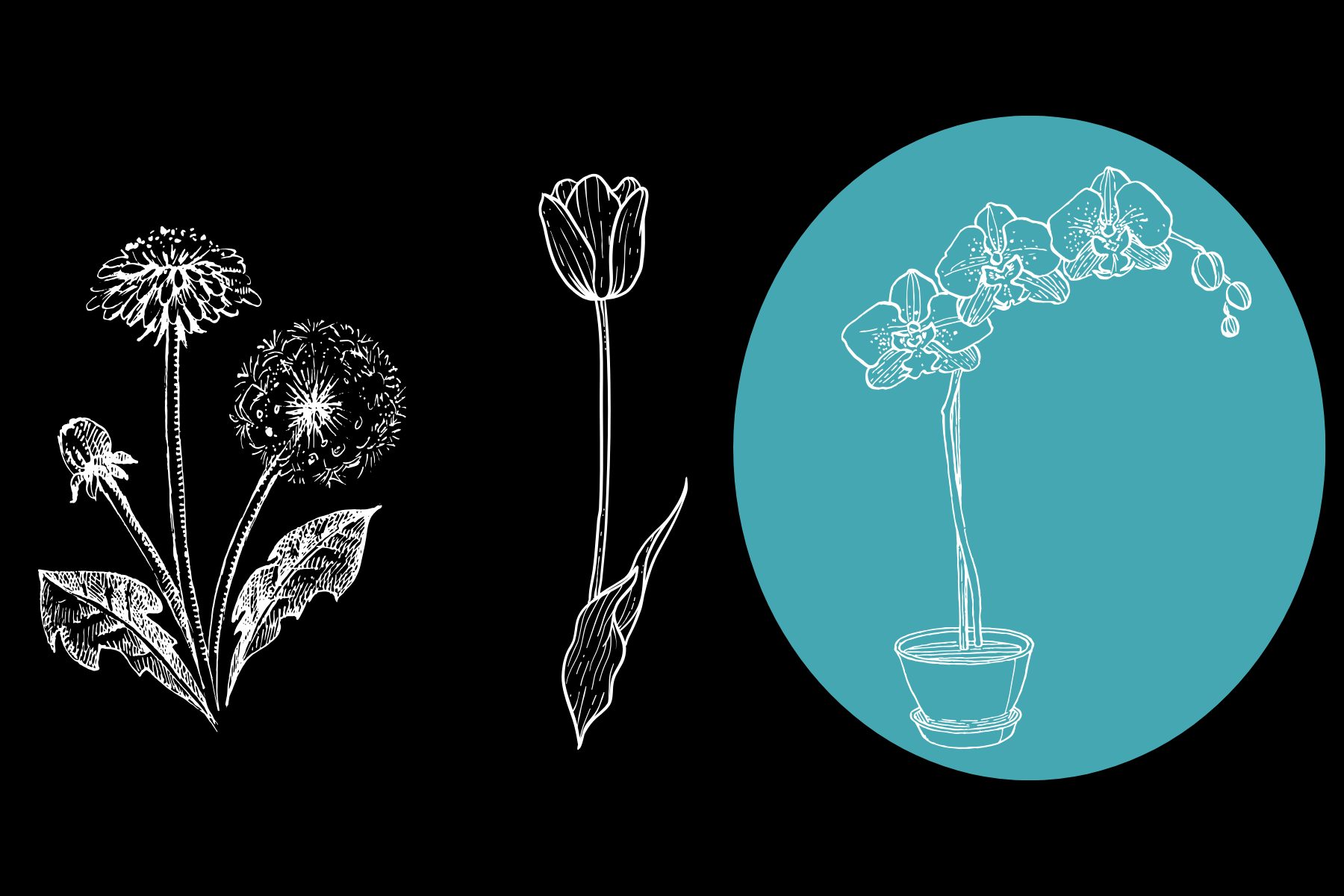
The analogy they used to explain this concept was: some children are dandelions (less reactive to environment), some are tulips (more reactive), and some are orchids (very reactive).
Some time later, I came across the connection between sensitivity and ADHD through coaching trainings in ADHD and neurodiversity.
I began reading about ASD and other types of neuro-divergence, and came across references to a highly sensitive phenotype again in several different sources. From the scientific to the more esoteric.
Sensitivity cropped up again as I learned about Hypermobility Pain Disorders with their Pentad of Multi-Systemic Comorbid Conditions.
And slowly, the puzzle pieces fall in to place: My experiences with chronic illnesses stacking one on top of the other. My journey through navigating trauma that didn't seem nearly as traumatic to others. All the like-minded friends now identifying as introverts, HSPs or receiving diagnoses of neuro-divergence. Almost every client who has felt drawn to work with me.
I want to clarify: around 30% of people have a sensitive phenotype. Being sensitive is not the same thing as having a diagnosis of ADHD, ASD, autoimmunity. However, a LOT of sensitive people receive one or more of those diagnoses in their lifetime.
Sensitivity is the thread that runs through all of it, even if we don’t see it.
We’re a real life patch of wild orchids.
Of course, we all know this on some level. Even if we didn’t realize we were more sensitive than average, other people did and made sure we knew. My sensitive friends and I have all been labelled as dramatic and too emotional at one time or another. Many of us tried to “toughen up” over the years only to (surprise!) burn out in our 30s/40s/50s. That’s because there is no changing your phenotype. Only masking it. You know, because of the shame. Many of these same people can now use their medical file as a door stopper.
I’m not arguing causation, but that this correlation of orchid phenotypes appears to run across all of these descriptions, conditions, disorders and neuro-types. Addressing our sensitivity in the way we care for ourselves and undertake growth and development can only be helpful. And indeed, ignoring it can make our good intentions backfire.
However, very few of the people I think of as most sensitive would identify that way. We’ve learned sensitive means weak, and we don’t relate to weak.
Because being sensitive is not a lack of toughness!
Far from it! You have to be tough to feel so much and endure. Every sensitive person I know is highly capable, tough as nails, and dead tired on some level.
Often, people don’t wake up to their sensitivity until they feel safe. Whether they found a career where they can unmask, a partner who makes them feel comfortable, or maybe they’ve retired. Or, like me, left school to pursue self-directed education. That’s often when everything that we were masking out of survival shows up to be addressed.
Sometimes we realize it when our body grabs us by the face and forces us to look our sensitivity in the face. Oh hey burn out! Hi autoimmune conditions! Hello anxiety, depression and chronic fatigue! But often we mask up and carry on because there is still more surviving to be done. And the cultural soup we’re in puts the blame on us. “Just toughen up and stop being so sensitive” they say.
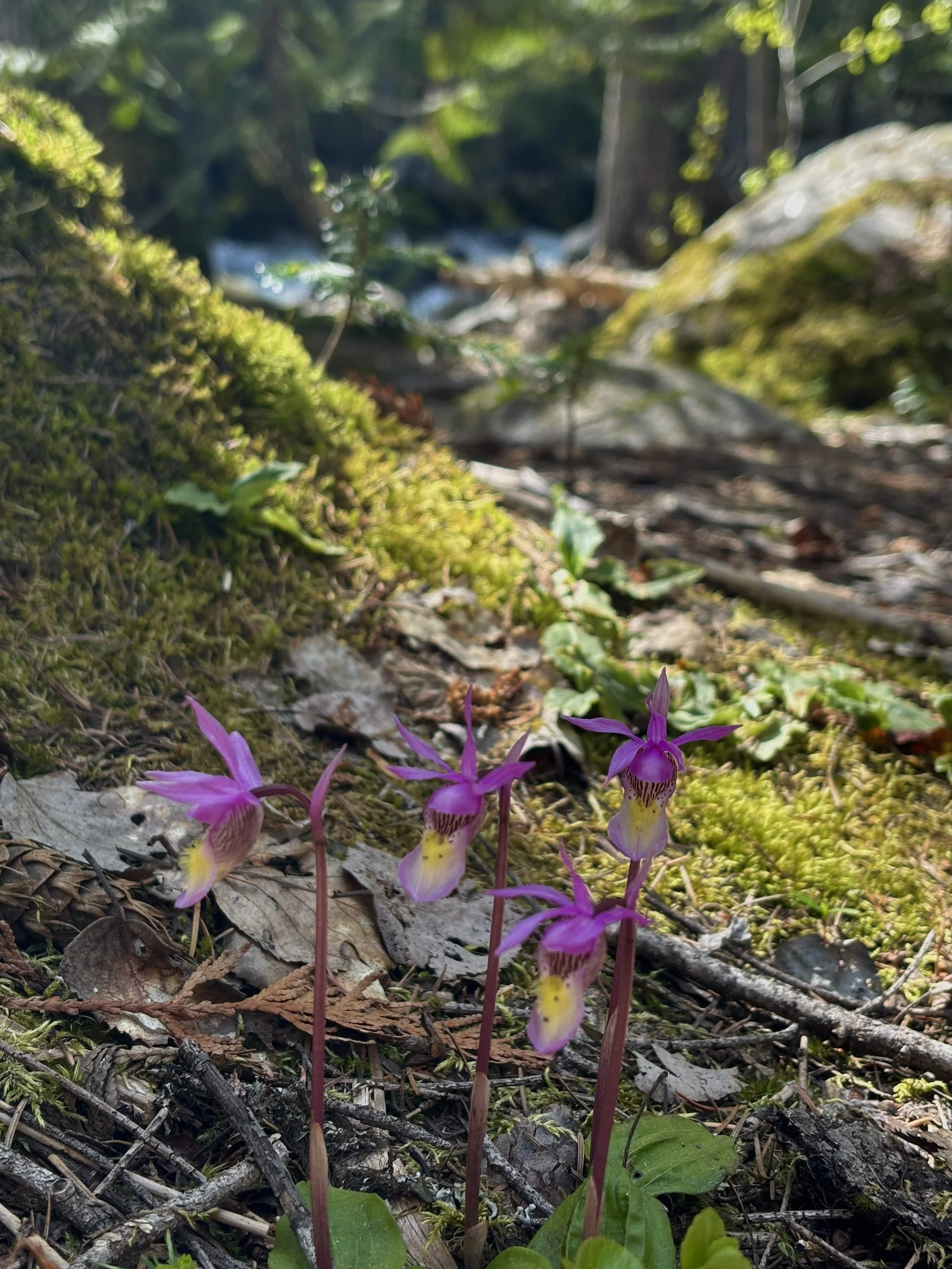
But resilience is not found in pretending to be a dandelion. It comes from excelling at being an orchid. Then either adapting/ influencing your environment to be a more orchid-friendly one or finding a new environment.
The first step is to stop believing we should be something different. The next step is to learn everything you can about care for the orchid that is your body. What works for you and what doesn’t.
Orchids, while sensitive, do grow in the wild. I see them every year in late spring around where I live.
In scattered minds, Dr. Mate joins many experts in arguing that evolution hasn’t gotten rid of sensitivity because it’s a feature, not a bug. I tend to agree.
A world that can support orchids is a better world for dandelions and tulips, too. We need each other as different parts of the collective human body.
If you’re ready to build an ecosystem around yourself that supports you in all of your orchid glory, let’s chat. Because, as a coach who words exclusively with orchids and other unusual human flora, my dear, It’s what I do! It’s what I live for!
*I’ve not credited the experts because the actual topic of their talk was something highly specific and not relevant to this article. The mention of sensitivity-types was more of an aside. The dandelion-orchid framework was popularized by W. Thomas Boyce, MD.