
The unexpected difference between work and play
Read me in 4.25 mins
The simple answer is that work is what we do for money and play is what we do for fun. But clearly, there’s more to it than that because there’s often overlap. Work and play are more similar than most people would admit. They both involve effort, focus, attention, and often the development of skills. And what if you make money doing something you find fun? Should we not be paid for doing things we like? Or does being paid mean we can’t like them? And what about when you find something that feels joyful and playful… and then it suddenly stops being fun. What happened?
If you’re recovering from burnout, or trying to build a life you don’t have to recover from you might wonder:
What’s the actual difference between work and play?
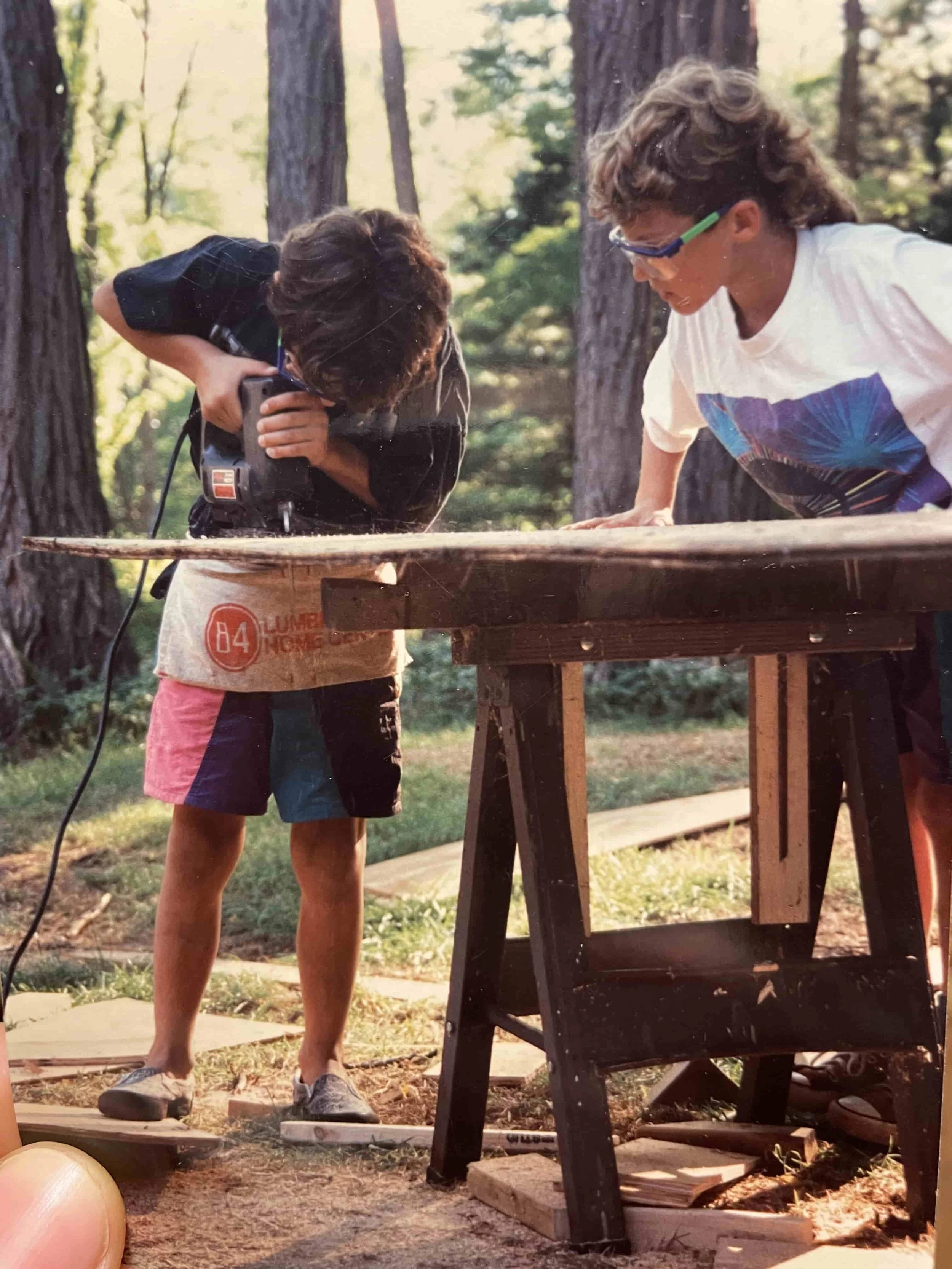
Let’s start with what it’s not.
The difference between work and play isn’t effort. Anyone who’s had a hobby (skateboarding, marathon running, golfing, knitting) can tell you that much. Exerting yourself doesn’t make your play feel less playful. Who among us didn’t do some horribly tedious thing for hours on end as a kid just because we wanted to? My husband built his first “house” at age 5 (pictured above). It’s still there. My friends and I had an elaborate make believe game that went on for years and had full scripts and story boards.
What is play? It’s exploration, experimentation, learning, and practice. Play is how we start interacting with and making sense of the world from our very earliest moments. It’s how we test our abilities, our limits and discover gaps we need to bridge through learning. Play involves a lot of “work” (as in effort) but feels like play because we’re following our curiosity. I play a lot while I’m working. My job involves drawing conversations in real time. The 5-year-old building a house for fun? He’s now an architect and builder. These aren’t coincidences. Play is one of the most powerful ways of growing and learning.
The magic formula that turns play into work:
To turn play into work (aka: suck all the fun out of it) take away two things: Safety and choice.
Let’s unpack that.
1) Safety:
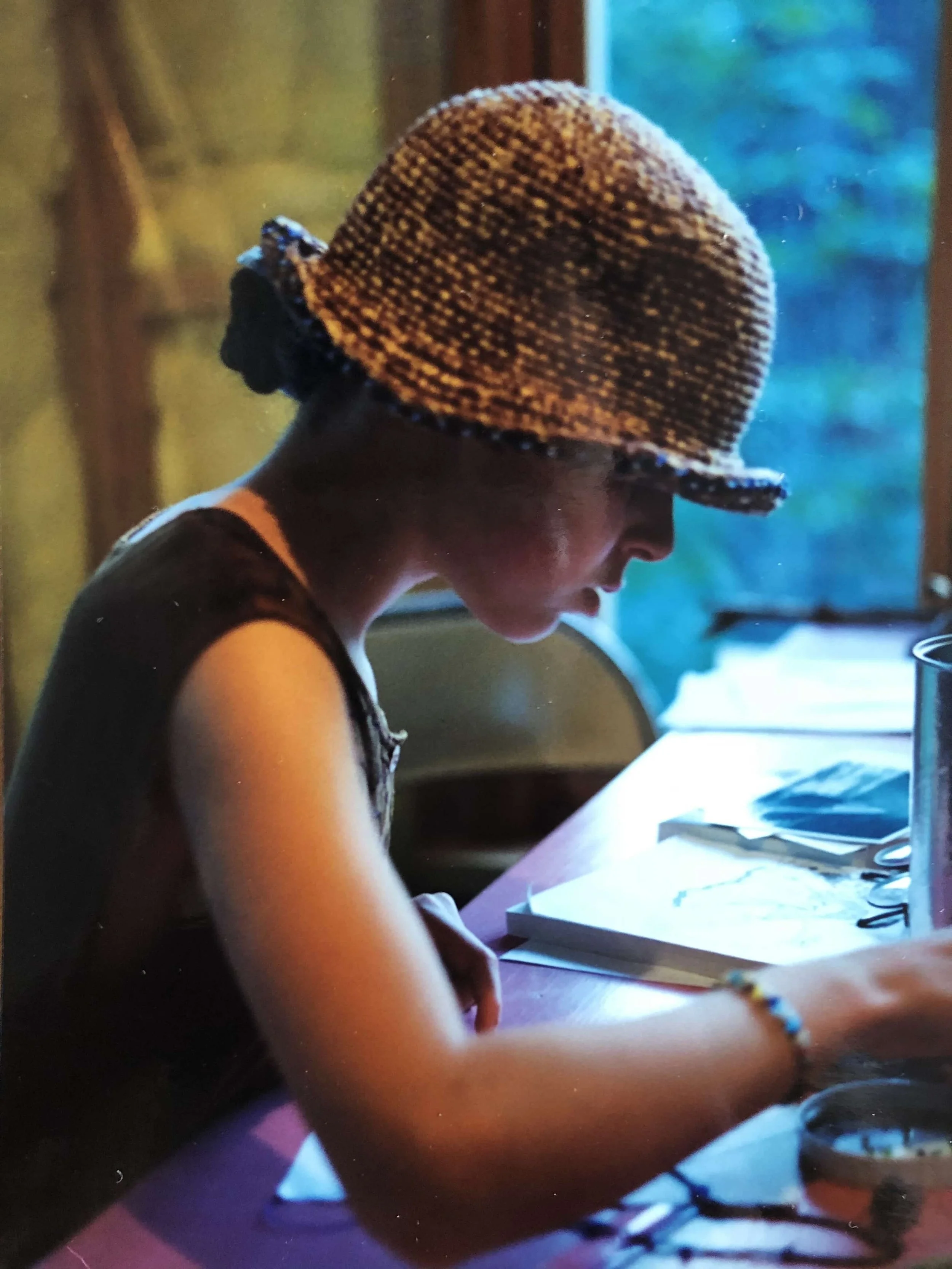
When play becomes something at which you can fail, it stops being play. At it’s core, play is an exploratory process. Safety looks like being allowed to explore freely without fear of failure. It evaporates when we’re graded, tested, and criticized. Criticizing ourselves counts too. When feel safe, we can see our mistakes as learning experiences. “What will happen if I do it this way?” Whatever the result is, you gain valuable information. If you have to get it right on the first try, then the point is performance, not exploration.
2) Choice/agency :
In order to have safety, you need to have choice. Not being able to choose if we participate in an activity or not feels very unsafe to our bodies and nervous systems. They need to be free to attend to so many signals and cues and act on them if necessary. The best example of this is starting a hobby, monetizing it, and then relying on it to meet your basic needs. Suddenly you don’t feel like you can put down the knitting needles to go for a walk or see a friend, even if you feel stiff and lonely. The choice has gone out of your craft, and with it safety and play.
What about money?
Money can take away safety and choice, but not necessarily! That’s why being paid isn’t the only factor that turns play into work. If being paid makes you feel unsafe to learn or experiment, or you need the money so badly that you can’t say no to work that would normally feel fun if you weren’t exhausted or overwhelmed (in this economy? Who hasn’t felt that way?) then yes. Money was the deciding factor. But there are many times when playful fun is compensated, or when work done for money feels playful.
Ok, so how do we protect play and have more of it?
How do we balance play and exploration with the pressures of making a living? Here are three things to start with if you want to protect the playful parts of your life and bring more play back into your work.
1) Clarity.
Get real with yourself about what exactly it is that you love about the playful parts of your life. Become conscious of how added pressures might change that experience for you. For example, I love to sew, but selling my creations would absolutely take the fun out of it for so many reasons. Sewing is a thing I do for me, and that’s how I’m going to keep it. However, selling my paintings doesn’t change how I feel about making them, so that works well.
2) Move slowly
If you decide to turn creative play into a business, I suggest being mindful about how much you ask of it. Go easy. The more pressure you put on your creative exploration to support you, the harder it’s going to be to keep in touch with the feeling of safety and choice. There’s no shame in a day job or side hustle. Especially if it allows you to grow your playful exploration at a pace that preserves the joy of it.
3) Boundaries!
Everyone’s talking about them! And for good reason. Here are three different kinds that will become your best allies in creative work and play.
Boundaries around compensation: “Yes, I love doing this! Yes, I do it part-time. Yes, you still need to pay me.”
Boundaries around criticism (from yourself and others): “This is a playful exploration and not subject to critique.” The internet can be mean, so you may consider whether you want to expose your exploration to the masses. You don’t have to share everything (no matter that Mark Zuckerberg might tell you).
Boundaries around choice: “I’m free to put this down and go do something else or nothing at all.”
Remember that, no matter what the hustle culture bros tell you, it’s ok to have things in your life that you do for fun. Actually, it’s not just ok, it's absolutely essential. One of my favourite quotes put it best:
“The opposite of play is not work — the opposite of play is depression,”
-Dr. Stuart Brown, founder of the National Institute for Play
The dominant culture pushes us to monetize every single thing we do. And our economic system makes it so hard to make ends meet that it seems reasonable to. But to be healthy and happy humans, we need to find ways to make it safe to explore, experiment and follow our curiosity. If you're ready to find motivation that isn’t based in urgency, and reclaim your own rhythm of living and working, I’m a burnout recovery coaching for minds that don’t fit the mould. Learn more about my work here.