
What is a Creative Rest Cycle?
Read me in: 3.44 mins
Have you ever been working away at your creative project and felt the inspiration and motivation just drain out of you? Maybe it came on slowly like a leak in a tire, or maybe it knocked the wind out of you like the rug was pulled out from under your feet. Either way…
Welcome to your rest cycle!
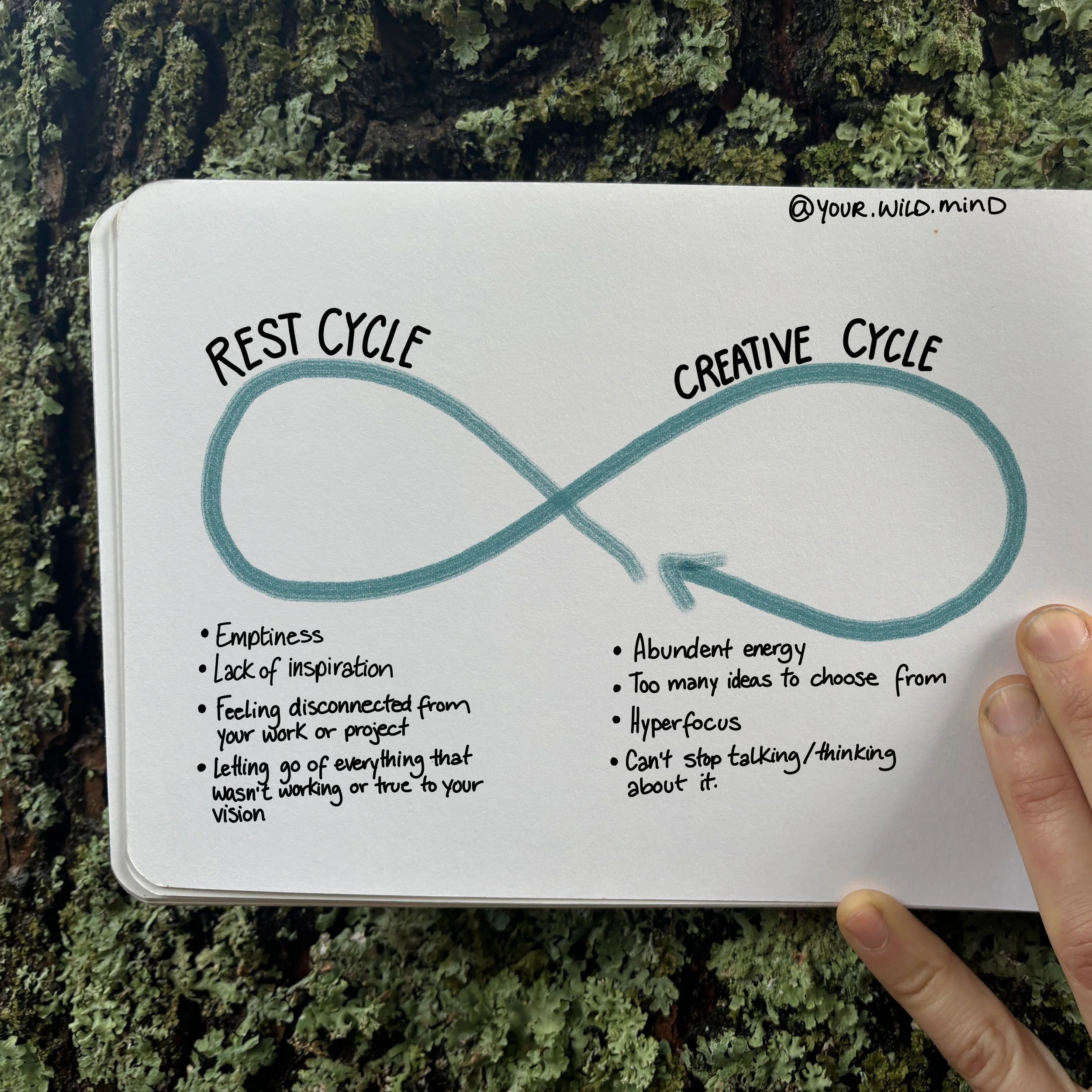
Creativity moves in many cyclical ways, but one of the big ones is a dance of fullness and emptiness. I think of it like high and low tide. These tides are just movements of the same ocean. Two sides of the same coin.
Our creative oceans move in a rhythm specific to us. All of our cycles vary in length and frequency. But no matter your pattern, you’ll eventually face the emptiness of low tide.
Here’s what to expect and how to deal.
(from an experienced creative cycle surfer).
You’re getting this straight from the horse’s mouth; because I’m mid-rest-cycle right now.
The first thing to remember is that this period of emptiness is just as much a part of your creativity as the times when you’re hyper-focused and bursting with inspiration. You can’t have one without the other. The second thing to know is that the rest cycle serves a purpose. No living thing can go on producing at a steady rate all the time. Even bacteria sleep. When you let a field stay empty and rest under a cover crop; the soil can recover and rebalance itself. Farmers call this a “fallow” period. I love that everything falls away in my rest cycles. When I come out of it, some things will have stood the test of time and others will have been composted into nutrients for new ideas.
How to recognize a rest cycle:
The first and biggest sign is feeling disconnected from what you’re working on or creating. Like you were reading a book and it’s suddenly disappeared. That could look like feeling lost. You might forget why you’re doing what you’re doing, or feel like you’ve lost the thread you were following. You might feel snowed under by other people’s opinions and advice. You could even feel repulsed by your creative work. Frustrated, bitter and angry are other words that come up. Personally, I’ll feel empty at first. Then, if I ignore that feeling and push through anyway, the emptiness turns into resentment. And then anger.
Phases of a rest cycle:
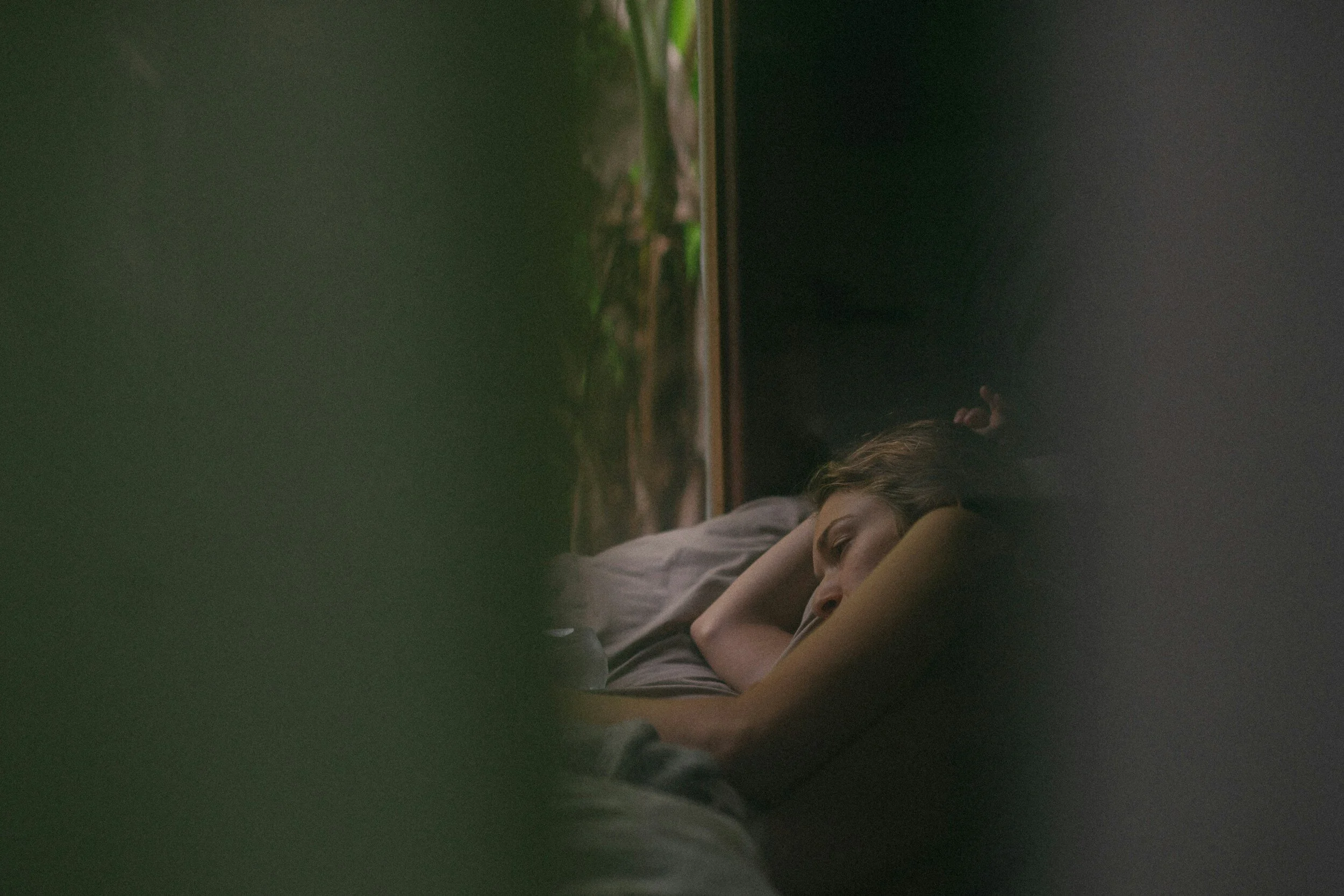
This part of the creative cycle seems to break down into 3 phases.
Detachment: the peeling away. This is the part where you start to notice you might be going into a rest phase with what you’re doing. It’s time to wrap up and put projects on the back burners.
Emptiness: Low tide. There’s not much flow around. It’s time to tidy up the ocean floor, look at seashells, or focus on something else for a while. Enjoy it while it lasts.
Appetite: Oh! would you look at that? A trickle of water in the sand. This might feel like curiosity, or your interest being piqued. It could be like getting back in the saddle and feeling the wind in your hair and remembering why you loved it so much.
What to do:
This is going to vary a bit depending on your personal creative rhythm. But in general,
the first thing to do is accept the emptiness. It can feel scary, and it’s easy to believe that you’ll lose your creative flow forever. But I promise you it will be back. In fact, if you allow your rest cycle to unfold, your creativity will come back bigger than ever. You can trust in your creative cycle the same way you can trust the tide to come back.
Learn about what you need. For me, it feels like a vacuum: total emptiness. And I need to lean into the void. But I know lots of folks who just need to switch lanes. Focus on something else. Changing mediums, or receiving energy instead of pouring it out (like going to concerts, libraries and galleries, or making dinner with friends) can do the trick. You might need to sleep a lot, or exercise, or clean your home. I find this is a really good time to work on building skills or preparing. Playing scales, prepping canvas, reading and research. Generally look for things that add nutrients to your field rather than depleting it. Or do nothing at all if you can. That’s good too.
Finally, make as much space around yourself as you can. I know this isn’t always possible. Most of us have jobs and families, and survival is getting tougher every day. I work a creative job that demands a lot no matter where I am in my creative cycle. I deal with this by rescheduling what I can, minimizing non-essential creative output, and giving myself extra time for the things that must be done, and more recovery time after.
xo Annalee
Want to dive deeper into your creative cycles and how to work with them? Click here and get access to a coach who gets it.
If you want more insights on how to live in synch with your rhythms and build a life that doesn’t burn you out delivered directly to your inbox…